Posts

Fashion in Architecture
Image
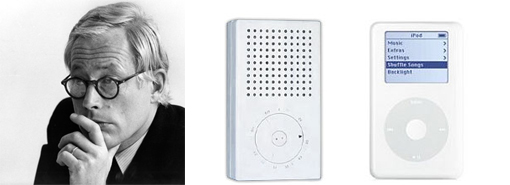
Fashion: Noun: A popular trend, esp. in styles of dress, ornament, or behavior. “I hate everything that is driven by fashion. From the beginning I was hating in the 60s the American way of styling, especially cars. They changed their styling things every two years and designed new ones which is nothing to do with good design” . Dieter Rams Dieter Rams is considered to be one of the most influential industrial designers of the 20th century. He is believed to have inspired the designs of iconic Apple products like iPod.  His observation is strikingly relevant in the field of architecture. "DESIGN TODAY HAS BECOME MUNDANE AND BANAL; FRIVOLOUS AND EFFETE. IT IS PLAYING ON CHEAP EMOTIONS, LIKE BEING THE TALLEST, THE LARGEST, OR THE MOST STUPID! BRIGHT COLORS, REFLECTIVE METALS AND USING A SURFEIT OF MATERIALS GET CRASS ATTENTION." [Now, a word of caution: the rest of the post may not be popular among or pleasing to all readers. The observations a...

Architects and sketching

Image
Architects are associated with sketching long before the profession has evolved. One automatically expects an architect to sketch and explain his point. Architectural career choices are still majorly influenced by the candidate’s proficiency in sketching . Is the skill heavily overrated? Or does it deserve the hype? The problem starts when one confuses sketching with ‘art’. Definitely, creativity (and thus similar tastes) has its own part in shaping an architect’s career. But what one forgets in the debate is the potential of a ‘ skill’ as basic as sketching which can help the professional in a long way throughout his career. It is a skill which can be learnt and mastered. A very powerful ‘tool’ - sometimes the most powerful - which if used with care, can simplify many a process. It’s also a skill which is very enjoyable. "STRIPPING INFORMATION INTO THE VERY BASICS HAS HUGE ADVANTAGES."

Can it be simpler?

Image
Research shows that 95 percent of people do not use 90 percent of the features on their video-recorders – because they are too complicated. What can you tell about a family where the clock on the video recorder is not flashing? They have a teenager in the house. In one country small businessmen have to cope with 16,000 laws in order to carry on their business. In another country the tax laws run to 40,000 pages. In another country the farmers rioted because they could not understand the new laws they were supposed to obey. It is said that Ken Olsen, the founder of DEC, once complained that at home he had a microwave oven that was so complex that he could not use it. An old woman spent a week in a shopping mall in Holland. She could not find her way out. She bought food during the day and slept on a bench at night. Instructions for machines, computers, etc., are always written by those who know the system and are not much help ...

Make Sure it's Your Train

Image
Accept it. Student architects are always confused about choosing the right career path. It gets all the more complicated with myriad options (and specializations) available today. Though the scene has changed a lot, I think the speech by Charles Correa more than a decade ago ( Convocation Address at the School of Planning and Architecture, New Delhi, 1996 ) still is very relevant. I want to share his thoughts as a continuation of my post  'architecture as a profession' . His observations are sharp, as usual, and I am sure that any architect at any stage of his career will get useful (if not motivating) insights from the speech. Extracts from his talk are given below.     “How much we grow depends on the issues we have the good fortune to address. This brings to mind a story told to me by Arvind Talati, a young Indian architect who followed Doshi at Corbusier's office in Paris. After working for two years or so, when Talati decided to return to ln...

Concept: a Myth?

Image
It was a lazy Saturday afternoon. Through the large window of my studio, I could see that it had started drizzling. The weather could not have an impact on me as I sat there spellbound, staring at a junior architect’s academic work portfolio. I just witnessed a project with ‘seemingly harmless’ brief got itself pushed into the shape of a ‘turtle(!)’ (you read it right). I couldn’t help myself from asking the architect the motivation behind the ‘work’ as it defied all my logic and little experience accumulated over years about the specific building type. Was he limited by the area program, a difficult or peculiar site, or confronted by any structural requirement, or any other thinkable factors which could have forced him to attempt this bizarre unconventional solution? Apparently none of the above! "THEY DO NOT BELIEVE THAT BUILDINGS CAN HAVE ‘SILENCE’ AS A CONCEPT, ‘LIGHT’ AS A CONCEPT OR ‘SPIRITUALITY’ AS A CONCEPT."

Architecture as a profession

Image
My friend’s son wanted to meet me. It was a bit of surprise to know that he needed counseling from me in choosing his career. To be more specific, he got caught in the latest fad of becoming an Architect (thanks to recent media for glamorizing the trade). I remember reading my earlier boss’ article describing a similar situation in which he tried (in vein) to explain to a student how the career of an architect is more than making pots of money, but about knowing ‘gaps’. Explaining in length about gap was primarily meant to indicate the importance of detailing, difference in schedules and budget etc in the profession.( Importance of detailing in itself demands more than a few posts.) It was not at all surprising that the starry eyed student opted for a much safer choice. So, is it all about mundane details or schedule ? Can’t he get paid handsomely for ‘dreaming creatively’ also? "THE COLLECTIVE SOCIAL AESTHETICS IS YET TO GET EVOLVED INTO A REFINED TASTE TO APPRECIA...

Are we learning right from past?

Image
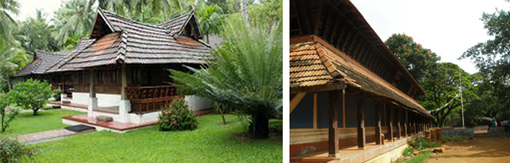
Back to bit of a regional talk. Always tried to explore (and respect) the wisdom accumulated over years (in all fields and architecture, in particular) an thus thought of sharing a few thoughts on vernacular residential architecture in Kerala. One of the most talked-about and debated issue in the construction industry today is Vastu. Vastu ( Thachu-shastram , its regional application) and its principles along with the danger of its over-commercialization may be discussed later(deserves separate post(s)!). What one ignores in the noise is a highly evolved vernacular construction method in Kerala, perfected over years. The attempt is to find out the reasons and conditions which might have resulted in this evolution which might in turn help to adapt these principles in present day scenario.   "ONCE WE START IDENTIFY AND ADAPT RELEVANT TECHNIQUES AND METHODS BASED ON LOGICAL THOUGHT PROCESS AND NOT UPON ITS   NOSTALGIC   VALUE OR IMPOSED VASTU NORMS, WE...