Posts

Showing posts with the label design

The purpose of Art

Image
....... is to inform and delight. When we think about art (and art in its plurality), there are only a few artists who have serious impact in everyday life. Milton Glaser is one among them. He is one of the most celebrated graphic designers in the United States. His work is easy to spot in a lineup -- it's simple, direct and clear, while leaping over conceptual boundaries, so that his work connects directly to the viewer like a happy virus. His best-known work may be the I [heart] N Y logo -- an image so ubiquitous, it's hard to believe there was a time when it didn't exist. All through his career, he didn’t trust styles and was clearly against the institutionalization of design.
Astronaut Pens: Not every solution is simple

Image
"During the space race back in the 1960's, NASA was faced with a major problem. The astronaut needed a pen that would write in the vacuum of space. NASA went to work. At a cost of $1.5 million they developed the "Astronaut Pen". Some of you may remember. It enjoyed minor success on the commercial market. The Russians were faced with the same dilemma. They used a pencil." Fantastic story, right? Except that's not what happened. NASA originally used pencils in space but pencils tend to give off things that float in zero-g (broken leads, graphite dust, shavings) and are flammable. So they looked for another solution. Independent of NASA, the Fisher Pen Company began development of a pen that could be used under extreme conditions and they succeded . As architects, we always try to emphasise the importance of simplifying our design solutions. Simplicity has its own advantages. But not every situation deserves a simple solution. 

What we forget when we design for public

Image
Designing for public is always a challenge. Be it a railway station, a cashier desk in a bank, a scooter parking area, a public library,  a round-about in a busy street,   or a pub, we cannot judge the design until it is used by the intended users for a specific period of time. Its very easy for designers to get carried away by the opportunity of creating something which is noticed by a large spectrum of users. We often try to "design" it such that it stands out and calls for attention. Seth Godin observes the process of designing public interfaces in general in his blog . First, do no harm--three rules for public interfaces When we think of design, we usually imagine things that are chosen because they are designed. Vases or comic books or architecture... It turns out, though, that most of what we make or design is actually aimed at a public that is there for something else. The design is important, but the design is not the point. Call it "publi...

Lulu Mall, Cochin: World of more happiness?

Image
Surprisingly, it was 'nostalgic'  for one of my NRI friend to check in to the Lulu hyper market in the recently opened Lulu shopping mall. This was the first time I heard about the feeling in a reverse situation! Touted as the largest shopping mall in India, it stores enough of surprises and indulgences for one of the most consumerist society in the country. Our studio was very much excited about the event not only because of the sheer chance to experience the mega mall, but because of the opening of the Mantra boutique showroom  inside the mall , which was designed by us. The mall was opened to public with much fanfare on 10 th of March.

The Sydney Opera House: Classic case history of failure of design competition?

Image
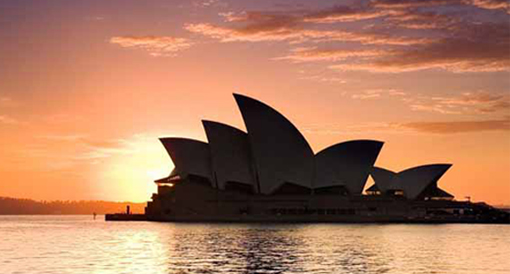
Google in 'Sydney' and you will find Sydney opera house as one of the first image results. Its not uncommon that a city gets synonymous with its architectural icon. One cannot undermine the importance of such an icon on the urban fabric. Sydney Opera House is the result of a design competition. Design competitions are always exciting. It shows how a similar brief gets varied responses from talented designers. It also give chances for the newcomers(except when they prefer to invite!). But most importantly, invariably, we expect something remarkable to get built, which makes it real exciting. [Design for NAMOC Museum by selected architects which include Zaha, Gehry, Safdie, OMA, UNStudio] The post " Are you in the wrapper business? " worries about architecture community giving more merit and importance to wrappers than its content. Not many competitions end up in disappointments though.  But there are cases which, if observed closely can give valuab...

Ornamentation vs Intensification

Image
I presuppose that what I am going to say is known to all of my fellow professionals (read 'architects'). But since I constantly meet with the necessity of explaining the same to students as well as many of my team members, I thought it will be useful to write about it. Arriving at details and detail patterns for a particular project is very rewarding as the whole design itself. One should always understand the reason behind each detail - whether it is appropriate, aesthetically pleasing, easy to build or needed at all. Most of the time, designers seem to be caught in a dilemma of using ‘ornamental’ patterns. Many find it pleasing to eye and many discard it as superfluous and surface deep. The real problem is when one doesn’t understand the difference between ‘ornamentation’ and ‘intensification’ or confuse between the two and take decisions. "BOTH ORNAMENTATION AND INTENSIFICATION MAY ADD BEAUTY, BUT THEY SPRANG FROM DIFFERENT SOURCES OF INSPIRATION...

Top 20 Architectural quotes.

Image
Curiously enough, architects have expressed themselves and their thoughts in many profound ways. Many are 'thought bites' which carry more than one layer. These are (my) top (favourite) architectural quotes (though a few are generic and can be applied to all forms of design). Enjoy..! The sun never knew how great it was until it struck the side of a building . Louis Kahn I prefer drawing to talking. Drawing is faster, and leaves less room for lies. Le Corbusier Be the best, not necessarily the original.  I M Pei God is in the details. Ludwig Mies van der Rohe An expert is a man who has  stopped  thinking - he  knows ! Frank Lloyd Wright Form ever follows function. Louis Sullivan I hate vacations. If you can build buildings, why sit on the beach? Philip Johnson

Coming of Age: Contemporary architecture in Srilanka

Image
Contemporary Srilankan architecture has been successful in continuing the legacy left by master Geoffrey Bawa. There are a handful of projects which are truly international yet rooted firmly on the country’s rich tradition. The vocabularies, in most cases, are unmistakably modern, but the spaces and details reflect local sensitivities. I thought to share one recent project representing the impressive body of works from Srilanka. The project is in itself a case study of housing in warm humid tropical climate. The project is a Holiday Bungalow for Mr. Sanjeewa Maddumage at Mathale Sri Lanka, built in 2009 by Architect Thisara Thanapathy (he won the prestigious Geoffrey Bawa award 2010/2011 for Excellence in Architecture). Framed view

Sangath: Lose track to come back

Image
Surely, I lost my way! I guess it was in 2005.    I stood on the front lawn facing the Sangath searching for the ceremonious entry into the much famous studio of B V Doshi.  The entrance itself was deceptive, to say the least.  I was very excited to visit the place as a part of an architectural ‘pilgrimage’ to Ahmadabad which also included great buildings like Sangrahalaya, IIMA, Mill owner’s Association building etc.  Then to my surprise, none other than B V Doshi came out of the building. He spotted me. I was a bit hesitant to meet the master and was literally ashamed to ask for the way.  To my surprise, he asked me whether I am looking for my way to get in. With a smile on his lips, he pointed towards a circuitous pathway that disappeared behind the greenery. Upon my request to see his studio, he told me to take a look around, taking my time. "YOU HAVE TO LOSE TRACK TO COME BACK . AND THIS IS WHAT GIVES YOU THE CHANCE TO T...

Architects and sketching

Image
Architects are associated with sketching long before the profession has evolved. One automatically expects an architect to sketch and explain his point. Architectural career choices are still majorly influenced by the candidate’s proficiency in sketching . Is the skill heavily overrated? Or does it deserve the hype? The problem starts when one confuses sketching with ‘art’. Definitely, creativity (and thus similar tastes) has its own part in shaping an architect’s career. But what one forgets in the debate is the potential of a ‘ skill’ as basic as sketching which can help the professional in a long way throughout his career. It is a skill which can be learnt and mastered. A very powerful ‘tool’ - sometimes the most powerful - which if used with care, can simplify many a process. It’s also a skill which is very enjoyable. "STRIPPING INFORMATION INTO THE VERY BASICS HAS HUGE ADVANTAGES."

Can it be simpler?

Image
Research shows that 95 percent of people do not use 90 percent of the features on their video-recorders – because they are too complicated. What can you tell about a family where the clock on the video recorder is not flashing? They have a teenager in the house. In one country small businessmen have to cope with 16,000 laws in order to carry on their business. In another country the tax laws run to 40,000 pages. In another country the farmers rioted because they could not understand the new laws they were supposed to obey. It is said that Ken Olsen, the founder of DEC, once complained that at home he had a microwave oven that was so complex that he could not use it. An old woman spent a week in a shopping mall in Holland. She could not find her way out. She bought food during the day and slept on a bench at night. Instructions for machines, computers, etc., are always written by those who know the system and are not much help ...

Concept: a Myth?

Image
It was a lazy Saturday afternoon. Through the large window of my studio, I could see that it had started drizzling. The weather could not have an impact on me as I sat there spellbound, staring at a junior architect’s academic work portfolio. I just witnessed a project with ‘seemingly harmless’ brief got itself pushed into the shape of a ‘turtle(!)’ (you read it right). I couldn’t help myself from asking the architect the motivation behind the ‘work’ as it defied all my logic and little experience accumulated over years about the specific building type. Was he limited by the area program, a difficult or peculiar site, or confronted by any structural requirement, or any other thinkable factors which could have forced him to attempt this bizarre unconventional solution? Apparently none of the above! "THEY DO NOT BELIEVE THAT BUILDINGS CAN HAVE ‘SILENCE’ AS A CONCEPT, ‘LIGHT’ AS A CONCEPT OR ‘SPIRITUALITY’ AS A CONCEPT."

Architecture as a profession

Image
My friend’s son wanted to meet me. It was a bit of surprise to know that he needed counseling from me in choosing his career. To be more specific, he got caught in the latest fad of becoming an Architect (thanks to recent media for glamorizing the trade). I remember reading my earlier boss’ article describing a similar situation in which he tried (in vein) to explain to a student how the career of an architect is more than making pots of money, but about knowing ‘gaps’. Explaining in length about gap was primarily meant to indicate the importance of detailing, difference in schedules and budget etc in the profession.( Importance of detailing in itself demands more than a few posts.) It was not at all surprising that the starry eyed student opted for a much safer choice. So, is it all about mundane details or schedule ? Can’t he get paid handsomely for ‘dreaming creatively’ also? "THE COLLECTIVE SOCIAL AESTHETICS IS YET TO GET EVOLVED INTO A REFINED TASTE TO APPRECIA...