Posts

Showing posts with the label architecture profession

The power of an idea

Image
Nothing is as exciting as an idea. The power of an idea is the driving force for many design professionals. The contemporary architectural scene is shifting more towards idea-centric designs from the popular form-centric ones.  But not everyday that you will witness a barrage of ideas..! It was during mid May that I got a chance to visit the exhibition  “ HOT TO COLD : an odyssey of architectural adaptation “  featuring the recent works by  BIG – Bjarke Ingels Group in the  Great Hall inside Washington DC's National Building Museum.  "I had taught myself that my work had to be fresh, different, seemingly outrageous. From then on, I understood that nothing is as exciting as an idea."   George Lois T he Hot to Cold exhibition gives a comprehensive overview of their recent work across the globe, ranging from the hottest to the coldest climates and  hosts 60 models of conceptual and completed buildings, for  BIG 's first ever...

10 Things that a creative professional should never tell a client

Image
I was tempted to have the title as '10 Things that an architect should never tell a client '.! Not always that you happen to read an article on a different profession and wonder how aptly it describes yours.  Couldn't resist sharing the article titled '10 Things that a photographer should never tell a client' on the December 2012 edition of Better Photography magazine, because each line was relevant to architecture profession as well. Just exchange the specifics and see how it starts making sense.!

Be a Connoisseur

Image
Masters of any art form has been invariably connoisseurs of their field. A connoisseur is defined by dictionary as a person with special knowledge or appreciation of a field, esp in the arts . You can find many analogies for the observation. Take the field of music, photography, fine art, motion pictures or wine tasting for that matter. Being a connoisseur automatically equip the creator to critically judge her work during the process itself. She thus knows where the work stands in comparison to the works of masters and most importantly, under varying contexts. She can appreciate the subtleties without getting carried away.  " THERE IS A GREAT CHANCE THAT A CONNOISSEUR WHO PRACTICES HER ART BECOMES AN 'OTAKU' WHO INFLUENCES MANY."  A connoisseur in the field of architecture need not be a great architect. But without failing, all great architects are famously connoisseurs of their craft. They could easily differentiate between a quality sp...

Are you in the wrapper business?

Image
We all are familiar with wrappers. It comes in all forms. There is a chance that you recognize a product mostly by the wrapping. You may want to disagree. But, honestly, many a time you buy the wrapper and not the product. You paid Rs 300 for the music CD that you bought last week. Now, it is very unlikely that you will pay that amount to just few songs once the labeled CD and its beautiful cover is removed. You may still take the music, but you may not buy it. You are most likely to open and read through a document arrived on your desk in a FedEx envelop than one received through mail though the content could be perfectly conveyed through a mail. A FedEx envelope has made the document look more important. Surely, the wrapping has done the difference.                LETS BUY THE WINE, AND NOT THE BOTTLE

Revisiting Le Corbusier’s MOA building

Image
World has just celebrated 125 th birthday of one of the most influential architect of the 20 th century, Le Corbusier. This reminded me of my visit to the much famous Millowner's Association Building in Ahmedabad a few years back. There are few cities in the world that can claim more than three buildings by Le  Corbusier, and Ahmedabad is one of them(after Paris, Chandigarh and La Chaux-de-Fonds), with the Museum, the Millowners Association Building, and the Sarabhai and Shodhan houses to its credit. Such major commissions, all initiated during Le Corbusier’s first visit to the city, attest to Ahmedabad’s intellectual climate and economic prosperity unrivalled in India for a city of its size. A comparative visual study by Peter Serenyi, comparing the Hall of Public Audiences, Red Fort and the Assembly building, Chandigarh hinting on the inspirations of the architect for his public buildings. Since its founding by Sultan Ahmed, Shah of Gujrat in 1411 AD, A...

Top 20 Architectural quotes.

Image
Curiously enough, architects have expressed themselves and their thoughts in many profound ways. Many are 'thought bites' which carry more than one layer. These are (my) top (favourite) architectural quotes (though a few are generic and can be applied to all forms of design). Enjoy..! The sun never knew how great it was until it struck the side of a building . Louis Kahn I prefer drawing to talking. Drawing is faster, and leaves less room for lies. Le Corbusier Be the best, not necessarily the original.  I M Pei God is in the details. Ludwig Mies van der Rohe An expert is a man who has  stopped  thinking - he  knows ! Frank Lloyd Wright Form ever follows function. Louis Sullivan I hate vacations. If you can build buildings, why sit on the beach? Philip Johnson

Coming of Age: Contemporary architecture in Srilanka

Image
Contemporary Srilankan architecture has been successful in continuing the legacy left by master Geoffrey Bawa. There are a handful of projects which are truly international yet rooted firmly on the country’s rich tradition. The vocabularies, in most cases, are unmistakably modern, but the spaces and details reflect local sensitivities. I thought to share one recent project representing the impressive body of works from Srilanka. The project is in itself a case study of housing in warm humid tropical climate. The project is a Holiday Bungalow for Mr. Sanjeewa Maddumage at Mathale Sri Lanka, built in 2009 by Architect Thisara Thanapathy (he won the prestigious Geoffrey Bawa award 2010/2011 for Excellence in Architecture). Framed view

(YGWYPF) You get what you pay for.

Image
There is an old Chinese saying: 一分 é’± 一分 è´§ , "yi fen qian, yi fen huo" (pronounced ee fen chee-ahn, ee fen hoo-oh), which gets translated into the post title ‘You get what you pay for.’  People are accustomed to understand the adage when they buy a luxury car, an apartment or an iPhone. Surprisingly, they pretend to forget it when they are commissioning an Architect. The curious fact is, an architect’s role has a lot of subjectivity into it that one will not be able to gauge it from the receiving end. (You could easily compare the features between a Merc and an Audi before signing the cheque). "THE SADDEST PART IS, IN MOST OF THE CASES, LESS PAY RESULTS IN SUBSTANDARD WORK."

Architect's schedule

Image
I always wondered how to manage time efficiently. The problem becomes manifold when the case of concern is a creative personnel. You have the classical time-management principles urging you to pack-in the maximum deliverable into a fixed time frame. They try to teach you to do 'multitasking'. You can thus learn the circus of having a coffee while riding a bus and read the newspaper as well. According to your proficiency, you can add more activities to it. I found it utterly foolish to practice it in a creative field. The only thing I can do along with having coffee and doodling with pencil  designing is to listen to songs. But curiously, I cannot continue it for long unless the songs are of a particular genre! My point is, its not how many things you do that matter, but what you did. "THERE HAS TO BE A 'DESIGNER'S SCHEDULE' AND A 'MANAGER'S SCHEDULE'. IN AN IDEAL SCENARIO, BOTH SHOULD NOT COINCIDE."

To frame it or not?

Image
I remember reading it somewhere that a guy went to a great place to watch sunset and missed it entirely because he tried to get it all photographed within the few minutes when it happened. All he left with was a handful of digital photographs and the darkness that surrounded him after the sunset. For the moment he was triumphant. He was able to capture the rare sight at various split seconds. But after returning from the place, he soon realized that he actually missed the entire sunset! Instead of soaking into the moment and experience it, he saw it through a second ‘eye’- a far inferior one than the original. "HE GETS SO BUSY IN CLICKING AND ADJUSTING THE MACHINE TO GET THE PERFECT FRAME THAT, MANY A TIMES, HE MISSES THE REAL PICTURE." The story was found very familiar to me.

Fashion in Architecture

Image
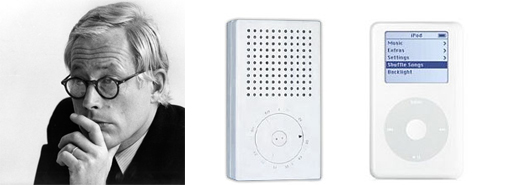
Fashion: Noun: A popular trend, esp. in styles of dress, ornament, or behavior. “I hate everything that is driven by fashion. From the beginning I was hating in the 60s the American way of styling, especially cars. They changed their styling things every two years and designed new ones which is nothing to do with good design” . Dieter Rams Dieter Rams is considered to be one of the most influential industrial designers of the 20th century. He is believed to have inspired the designs of iconic Apple products like iPod.  His observation is strikingly relevant in the field of architecture. "DESIGN TODAY HAS BECOME MUNDANE AND BANAL; FRIVOLOUS AND EFFETE. IT IS PLAYING ON CHEAP EMOTIONS, LIKE BEING THE TALLEST, THE LARGEST, OR THE MOST STUPID! BRIGHT COLORS, REFLECTIVE METALS AND USING A SURFEIT OF MATERIALS GET CRASS ATTENTION." [Now, a word of caution: the rest of the post may not be popular among or pleasing to all readers. The observations a...

Architects and sketching

Image
Architects are associated with sketching long before the profession has evolved. One automatically expects an architect to sketch and explain his point. Architectural career choices are still majorly influenced by the candidate’s proficiency in sketching . Is the skill heavily overrated? Or does it deserve the hype? The problem starts when one confuses sketching with ‘art’. Definitely, creativity (and thus similar tastes) has its own part in shaping an architect’s career. But what one forgets in the debate is the potential of a ‘ skill’ as basic as sketching which can help the professional in a long way throughout his career. It is a skill which can be learnt and mastered. A very powerful ‘tool’ - sometimes the most powerful - which if used with care, can simplify many a process. It’s also a skill which is very enjoyable. "STRIPPING INFORMATION INTO THE VERY BASICS HAS HUGE ADVANTAGES."

Can it be simpler?

Image
Research shows that 95 percent of people do not use 90 percent of the features on their video-recorders – because they are too complicated. What can you tell about a family where the clock on the video recorder is not flashing? They have a teenager in the house. In one country small businessmen have to cope with 16,000 laws in order to carry on their business. In another country the tax laws run to 40,000 pages. In another country the farmers rioted because they could not understand the new laws they were supposed to obey. It is said that Ken Olsen, the founder of DEC, once complained that at home he had a microwave oven that was so complex that he could not use it. An old woman spent a week in a shopping mall in Holland. She could not find her way out. She bought food during the day and slept on a bench at night. Instructions for machines, computers, etc., are always written by those who know the system and are not much help ...

Make Sure it's Your Train

Image
Accept it. Student architects are always confused about choosing the right career path. It gets all the more complicated with myriad options (and specializations) available today. Though the scene has changed a lot, I think the speech by Charles Correa more than a decade ago ( Convocation Address at the School of Planning and Architecture, New Delhi, 1996 ) still is very relevant. I want to share his thoughts as a continuation of my post  'architecture as a profession' . His observations are sharp, as usual, and I am sure that any architect at any stage of his career will get useful (if not motivating) insights from the speech. Extracts from his talk are given below.     “How much we grow depends on the issues we have the good fortune to address. This brings to mind a story told to me by Arvind Talati, a young Indian architect who followed Doshi at Corbusier's office in Paris. After working for two years or so, when Talati decided to return to ln...

Concept: a Myth?

Image
It was a lazy Saturday afternoon. Through the large window of my studio, I could see that it had started drizzling. The weather could not have an impact on me as I sat there spellbound, staring at a junior architect’s academic work portfolio. I just witnessed a project with ‘seemingly harmless’ brief got itself pushed into the shape of a ‘turtle(!)’ (you read it right). I couldn’t help myself from asking the architect the motivation behind the ‘work’ as it defied all my logic and little experience accumulated over years about the specific building type. Was he limited by the area program, a difficult or peculiar site, or confronted by any structural requirement, or any other thinkable factors which could have forced him to attempt this bizarre unconventional solution? Apparently none of the above! "THEY DO NOT BELIEVE THAT BUILDINGS CAN HAVE ‘SILENCE’ AS A CONCEPT, ‘LIGHT’ AS A CONCEPT OR ‘SPIRITUALITY’ AS A CONCEPT."

Architecture as a profession

Image
My friend’s son wanted to meet me. It was a bit of surprise to know that he needed counseling from me in choosing his career. To be more specific, he got caught in the latest fad of becoming an Architect (thanks to recent media for glamorizing the trade). I remember reading my earlier boss’ article describing a similar situation in which he tried (in vein) to explain to a student how the career of an architect is more than making pots of money, but about knowing ‘gaps’. Explaining in length about gap was primarily meant to indicate the importance of detailing, difference in schedules and budget etc in the profession.( Importance of detailing in itself demands more than a few posts.) It was not at all surprising that the starry eyed student opted for a much safer choice. So, is it all about mundane details or schedule ? Can’t he get paid handsomely for ‘dreaming creatively’ also? "THE COLLECTIVE SOCIAL AESTHETICS IS YET TO GET EVOLVED INTO A REFINED TASTE TO APPRECIA...

Are we learning right from past?

Image
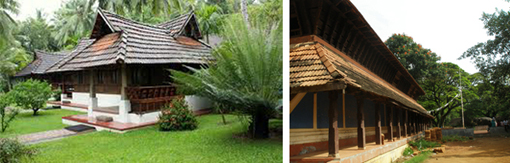
Back to bit of a regional talk. Always tried to explore (and respect) the wisdom accumulated over years (in all fields and architecture, in particular) an thus thought of sharing a few thoughts on vernacular residential architecture in Kerala. One of the most talked-about and debated issue in the construction industry today is Vastu. Vastu ( Thachu-shastram , its regional application) and its principles along with the danger of its over-commercialization may be discussed later(deserves separate post(s)!). What one ignores in the noise is a highly evolved vernacular construction method in Kerala, perfected over years. The attempt is to find out the reasons and conditions which might have resulted in this evolution which might in turn help to adapt these principles in present day scenario.   "ONCE WE START IDENTIFY AND ADAPT RELEVANT TECHNIQUES AND METHODS BASED ON LOGICAL THOUGHT PROCESS AND NOT UPON ITS   NOSTALGIC   VALUE OR IMPOSED VASTU NORMS, WE...